
The easiest way to avoid seed phrase scams? Don’t use a seed phrase.
Since the beginning of time, scammers have found ways to turn the misfortune of others into a payday.
Unfortunately, bitcoin isn’t immune. Like cash, whoever holds it owns it, a fact that makes it a prime target for scoundrels and thieves. And the legacy wallet backup that many tout as a kind of superpower—the seed phrase—is perhaps the most vulnerable point in the system.
Seed phrase as low-tech attack vector
While the security of the bitcoin network itself has never been compromised, many people and systems that interact with it have been. “Bitcoin hacks” are more accurately “people hacks”—social engineering schemes that trick people into using malware or sharing information that can lead to compromise.
In a lot of them—phishing, pig butchering, and advance-fee scams to name a few—the weakest link in the chain isn’t technological at all. Often, it’s emotional. It’s you, buying into a false sense of urgency, a promise that’s too good to be true, or even just having genuine goodwill toward someone who appears in need.
Whatever the motivation, the result is the same: you, giving something of value, willingly to an attacker.
Perhaps the most insidious bitcoin scams prey on people who have otherwise done everything right: security-conscious people who know enough to keep their keys off exchange, in legacy hardware wallets.
The worst part? They rely on you giving up your seed phrase, ostensibly the hallmark of self-custody for the last decade and the last line of defense between you and your coins.
Anatomy of a seed phrase scam
Picture this: you get an email from the maker of your hardware wallet. It comes from what appears to be a legitimate email address. It’s branded perfectly. There are no weird typos or turns of phrase. Maybe it even shows your name or home address. By most measures, it passes the smell test, at least at first.
It says there’s been a security breach affecting thousands of users, and that your hardware has been impacted. You need to take action now.
Or it says there’s a problem with the software wallet running on your machine. Again, it’s critical that you fix this immediately, because your funds are at risk.
Or their system has indicated that you haven’t backed up your seed phrase. If you don’t back it up at such and such a website in the next 24 hours, it can be assigned to someone else, putting your funds at risk.
Whatever the scenario, to keep your funds safe, you just need to punch your seed phrase into what appears to be an extremely official-looking website or app or other piece of software. Or here, take this new seed phrase and move your funds, because your old one has been compromised. And you need to do it now.
Of course, the whole thing was a setup from the start.
Once you’ve given up your seed phrase, your wallet is quickly taken over and emptied. Or if you’ve fallen for the new seed phrase trick, you’ve moved your funds into an attacker’s control. Whatever stack you had isn’t yours anymore, all because you genuinely thought you were doing the right thing. You bought into a version of reality that wasn’t real. And your seed phrase, which should have been your last line of defense, made it way, way too easy to give away what might be significant wealth.
No seed phrase means no seed phrase scams
I can hear you saying, “this would never happen to me. I know to never, ever give up my seed phrase to anyone, no matter who they say they are or what they say the risk is.” But the thing is: it does happen, to people who thought the same thing—people who have otherwise done everything exactly right.
That’s the reason seed phrase scams continue to proliferate, targeting even those security-conscious enough to self-custody: they work.
Even hardcore bitcoiners have tales of friends and acquaintances falling prey because “law enforcement” or “my wallet’s customer service” or “my crypto exchange” called them about a made-up security breach with a false sense of urgency. The setup feels real, the urgency feels real, and so they act in haste and make a big, expensive, irreversible mistake. One with very real consequences.
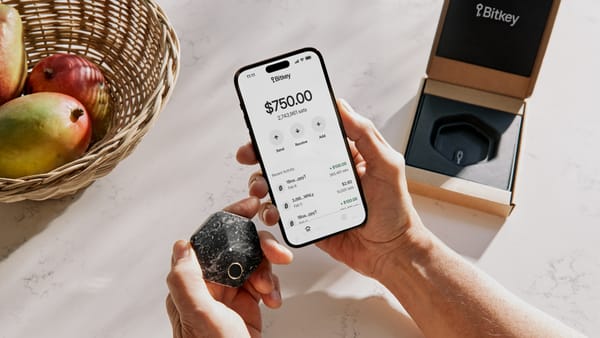
Part of the beauty of Bitkey’s security architecture is that it eliminates the kind of single nuclear password vector that seed phrases enable—a vector that has been essentially standard-issue across bitcoin before now.
Seed phrase scams become impossible, because you can’t steal what isn’t there. Not only that, but the cost and technical barrier to steal from Bitkey, compared to simply tricking someone into giving up their seed phrase, is much higher. Instead of simply telling customers to essentially “be careful” with a seed phrase, we’ve designed that single point of failure out of the system entirely.
As scammers become more sophisticated, and AI tools make it harder and harder to parse what’s real from what isn’t, there is an easy step that you can take to both preserve self-custody and make it impossible to succumb to seed phrase scams: use Bitkey, the self-custody setup that doesn’t rely on a seed phrase as the last line of defense.
Because you can’t give away something you never had to begin with.
Want to learn more about Bitkey? Visit bitkey.world.